Source Waterproof Adhesive Vinyl Cutting Film for Advertising, Decoration, Packaging
Explore 30 listings of waterproof adhesive vinyl cutting film suitable for advertising, decoration, and packaging applications. Buyers can compare customization options, material types, and delivery times from verified suppliers in China.
Key considerations
Products List




Comprehensive Sourcing Guide
Strategic Sourcing Guide for Waterproof Adhesive Vinyl Cutting Film
The global market for waterproof adhesive vinyl cutting film has expanded significantly as businesses seek durable, high-performance materials for signage, vehicle graphics, and industrial labeling. For procurement professionals, navigating this sector requires a disciplined approach that distinguishes between marketing claims and verifiable product attributes. This guide synthesizes observed market data and technical specifications to provide a framework for sourcing reliable materials without relying on unverified assertions. The focus remains on understanding the material composition, verifying dimensional standards, and establishing robust quality control protocols before committing to large-scale orders.
Understanding Material Composition and Core Attributes
The foundation of any successful procurement strategy for vinyl cutting film lies in a precise understanding of the raw materials and their physical properties. Based on current market observations, the dominant material category for this application is Polyvinyl Chloride (PVC). This material is favored for its flexibility, durability, and resistance to environmental degradation. When evaluating potential suppliers, buyers must confirm that the product explicitly lists PVC as the primary film component. The specific thickness of the PVC film is a critical variable; observed data indicates a standard thickness of 80 microns (80um) for high-quality cutting films. This dimension ensures the material is robust enough to withstand cutting processes without tearing while remaining flexible enough for application on curved surfaces.
Beyond the film itself, the backing paper plays an equally vital role in the cutting and application process. The backing paper acts as a carrier that supports the adhesive and film during the die-cutting phase. Market data suggests a backing paper weight range of 120 to 140 grams per square meter (gsm). This weight provides sufficient rigidity for the cutting plotter to grip the material effectively. Additionally, the transparency of the film is a key attribute for specific applications; observed products are often transparent, allowing for layering or application over existing surfaces without obscuring the underlying texture. The hardness of the material is generally described as "soft," which is essential for conforming to complex shapes without wrinkling or lifting at the edges.
Technical Specifications and Dimensional Standards
Precision in dimensions is non-negotiable when sourcing adhesive vinyl for commercial use. Inconsistent roll widths or lengths can lead to material waste, cutting errors, and increased production costs. The industry standard for roll widths typically includes 0.61 meters and 1.22 meters. These widths correspond to common cutting plotter capabilities and signage installation requirements. The length of the roll is another critical specification; observed data points to standard lengths of 50 meters for many product lines, though some variations exist with lengths up to 800 meters for specific industrial applications. Buyers should verify the exact standard dimensions listed on the product specification sheet, ensuring they match the formula: width multiplied by length (e.g., 1.22m x 50m).
The adhesive system is the third pillar of technical specification. The type of glue determines the removability and longevity of the sticker. Two primary categories are observed in the market: removable glue and permanent adhesive. For applications requiring temporary signage or repositioning capabilities, removable glue is the requisite choice. Conversely, permanent adhesives are necessary for long-term outdoor applications. The performance of the adhesive is also temperature-dependent. Verified data indicates a best-use temperature range of 0 to 100 degrees Celsius. Operating outside this range can compromise the adhesive bond or cause the film to become brittle. Furthermore, the surface finish is often enhanced through film lamination, which provides an additional layer of protection against scratches and UV radiation.
Compliance, Certification, and Safety Verification
While the primary focus of this guide is on technical attributes, compliance and safety standards are essential for B2B procurement, particularly for products used in food packaging or consumer-facing environments. Some observed product listings mention compliance with standards such as Oeko-Tex, though this should be treated as a background indicator rather than a guaranteed certification for every SKU. Buyers must not assume that a product listing implies full certification status without requesting specific documentation. The verification process should involve asking suppliers for current test reports that confirm the absence of harmful substances, particularly if the vinyl is intended for food contact or children's products.
For industrial applications, the material must meet specific fire safety and chemical resistance standards. While specific standard numbers are not universally mandated across all product listings, the presence of a "Waterproof" feature is a critical baseline requirement. This attribute implies resistance to moisture ingress, which is vital for outdoor signage and vehicle graphics. Buyers should request evidence of water resistance testing, such as immersion tests or humidity chamber results, to validate the "Waterproof" claim. Additionally, the "Heat Sensitive" attribute observed in some product lines suggests that the material may react to thermal changes, requiring careful handling during the application process. Understanding these nuances helps in selecting the right material for the specific environmental conditions of the end-use application.
Cost Drivers and Economic Factors
The pricing structure for waterproof adhesive vinyl cutting film is influenced by several variables, including material quality, roll dimensions, and customization requirements. Observed price ranges in the market span from $0.15 to $80 per unit, reflecting the diversity of product tiers from basic commodity films to premium, specialized materials. The Minimum Order Quantity (MOQ) is another significant cost driver. Data indicates an MOQ range of 1 roll to 3,660 rolls. For small businesses or prototyping phases, suppliers offering an MOQ of 1 roll provide a low-risk entry point. However, for large-scale production runs, negotiating a lower unit price by increasing the order volume is a standard practice.
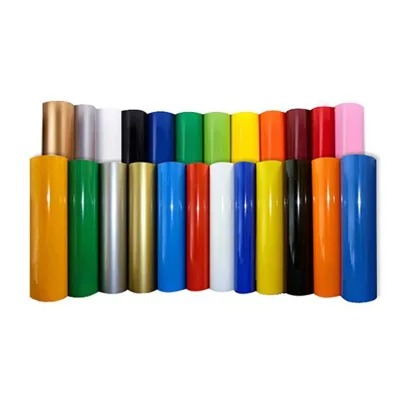
Customization is a major factor in the final cost. Products that offer "Custom Sticker" capabilities often command a premium due to the additional setup and processing time required. The availability of customization options, such as specific colors, finishes (e.g., Metallic Brushed Gold), or custom dimensions, adds value but also increases the unit cost. Buyers should weigh the cost of customization against the potential return on investment. For instance, a premium metallic finish may justify a higher price point for high-end branding, whereas a standard matte finish may be more cost-effective for general advertising. Additionally, the packaging method, such as hard cartons or shrink-wrapped rolls with label cards, can influence shipping costs and the overall landed cost of the product.
Supplier Evaluation and Operational Reliability
Selecting the right supplier is as critical as selecting the right material. The supply chain for vinyl cutting film is global, with production hubs located in regions such as Zhejiang, Henan, and Jiangsu in China. While the specific origin is a factual observation, buyers should not assume that all products from these regions meet the same quality standards. Instead, the evaluation should focus on the supplier's ability to provide consistent quality and reliable lead times. Observed delivery times range from 1 to 7 days, which is a significant advantage for urgent projects. However, buyers must verify if this lead time applies to stock items or if it includes the time required for customization.
When evaluating suppliers, procurement professionals should look for transparency in their product listings. A reliable supplier will clearly state the product model number, material type, and specific dimensions. For example, models like SD-OWV140C, SD-SAV140C, and LH0771 represent specific product lines with distinct attributes. The presence of a brand name, such as "Lianghua," can also be a factor in brand recognition and quality assurance. However, buyers should avoid relying solely on brand reputation and instead demand sample verification. Many suppliers offer free samples, which is a crucial step in validating the material's performance before placing a bulk order. The ability to provide samples quickly and accurately is a strong indicator of a supplier's operational efficiency.
Quality Control and Long-Term Procurement Strategy
Implementing a robust quality control (QC) protocol is essential for mitigating risks associated with adhesive vinyl procurement. The QC process should begin with the receipt of samples and extend through the final production run. Key inspection points include verifying the film thickness, checking the adhesive bond strength, and ensuring the roll dimensions match the ordered specifications. The "Hardness" and "Transparency" attributes should be visually and physically verified to ensure they meet the project requirements. For applications involving digital printing, the surface finish must be compatible with the printing technology to prevent ink smudging or poor adhesion.
Long-term procurement considerations involve building a relationship with suppliers who can scale with the buyer's needs. As demand grows, the ability to maintain consistent quality and lead times becomes paramount. Buyers should establish clear communication channels regarding order updates, potential delays, and quality issues. The "Molding method" of multiple extrusion is a technical detail that suggests a specific manufacturing process; understanding this can help in troubleshooting quality issues if they arise. Furthermore, the "Best Use Temperature" range should be communicated to the end-user to ensure proper application conditions. By focusing on these long-term factors, buyers can secure a stable supply chain that supports their business growth without compromising on product quality.
Typical Applications and Market Versatility
The versatility of waterproof adhesive vinyl cutting film makes it suitable for a wide array of applications. The primary use cases include advertising, decoration, and custom sticker production. The material's ability to be cut into intricate shapes and its resistance to water make it ideal for outdoor signage, vehicle wraps, and window graphics. Beyond advertising, the film is also used in packaging, such as bottled beverage labels, shipping labels, and price tags. The "Food" and "Medicine" applications mentioned in some product attributes highlight the material's potential in the healthcare and retail sectors, provided that all relevant safety standards are met.
The specific application dictates the choice of material attributes. For example, a "Metallic Brushed Gold Vinyl" is often selected for luxury branding and decorative purposes, while a "Premium Color vinyl Matte" is preferred for general advertising where glare reduction is necessary. The "Heat Sensitive" feature may be particularly useful for applications requiring heat-activated adhesives or specific installation techniques. Understanding the end-use environment allows buyers to select the most appropriate product from the available range. Whether for a temporary event display or a permanent industrial label, the right selection of vinyl cutting film ensures durability, aesthetic appeal, and functional performance.
Comparative Analysis of Product Attributes
To facilitate informed decision-making, the following table summarizes key observed attributes of the available vinyl cutting film products. This comparison highlights the variations in specifications that buyers should consider when selecting a product for their specific needs.
| Attribute | Observed Value/Range | Relevance to Procurement |
|---|---|---|
| Material | PVC | Core durability and flexibility factor. |
| Thickness | 80um | Determines cutability and film strength. |
| Backing Paper | 120-140gsm | Affects cutting precision and handling. |
| Width Standard | 0.61m / 1.22m | Matches plotter and installation needs. |
| Length Standard | 50m / 800m | Influences total coverage and waste. |
| Adhesive Type | Removable / Permanent | Dictates repositioning capability. |
| Temperature Range | 0-100°C | Defines operational limits. |
| Surface Finish | Film Lamination | Provides scratch and UV protection. |
| Customization | Available | Allows for tailored branding solutions. |
| MOQ | 1 Roll - 3660 Rolls | Impacts initial investment and cash flow. |
This comparative view underscores the importance of matching specific product attributes to project requirements. By systematically evaluating these factors, buyers can optimize their sourcing strategy, ensuring they acquire materials that deliver the desired performance while maintaining cost efficiency. The diversity of options available in the market allows for a tailored approach to every procurement challenge, from small-scale custom stickers to large-scale industrial packaging solutions.
FAQs
What material is used for waterproof adhesive vinyl cutting film?
The primary material is Polyvinyl Chloride (PVC), which offers flexibility and durability. Some variants use Pet Film, but PVC remains the dominant choice for cutting applications requiring resistance to environmental degradation.
Can I get free samples of waterproof adhesive vinyl cutting film?
Yes, free samples are provided by many suppliers to validate material performance. This allows buyers to verify thickness and adhesive quality before committing to bulk orders for custom sticker production.
What is the standard thickness for waterproof adhesive vinyl cutting film?
The standard thickness for high-quality cutting films is 80 microns. This dimension ensures the material withstands cutting processes without tearing while remaining flexible enough for curved surface application.
Which adhesive types are available for waterproof adhesive vinyl cutting film?
Available adhesive types include removable glue and permanent adhesive options. Removable glue is suitable for temporary signage, while permanent adhesives are required for long-term outdoor applications like vehicle graphics.
How long is the delivery time for waterproof adhesive vinyl cutting film?
The typical delivery time ranges from 1 to 7 days for stock items. Buyers should verify if this lead time includes customization time, as custom sticker production may require additional processing duration.
What are the standard roll dimensions for waterproof adhesive vinyl cutting film?
Standard roll widths are typically 0.61 meters or 1.22 meters with lengths of 50 meters. Some industrial variations may reach up to 800 meters, but 50 meters is the common standard for most applications.
Can the waterproof adhesive vinyl cutting film be customized for specific uses?
Yes, customization is available for specific applications like advertising or decoration. Buyers can request custom colors, finishes such as metallic brushed gold, and specific dimensions to meet unique project requirements.